
Under The Bridge
Life isn’t built on long stretches of certainty—it’s built on flickers of feeling, split-second choices where we decide to move or stay still.

Last August, I was riding a southbound train along Italy’s western edge, pressed between friends and the sea. We were headed to the Port of Piombino, where a ferry would carry us to Elba for one last summer escape before work reclaimed us.
For the first stretch, the tracks clung to the cliffs. The Tyrrhenian Sea hovered just beyond reach. The carriage slipped in and out of tunnels, and each time it burst into daylight, the ocean flashed electric blue against a soft sky—there, then gone. The beauty was almost cruel. It left me mourning something I’d never had.
Then it happened.
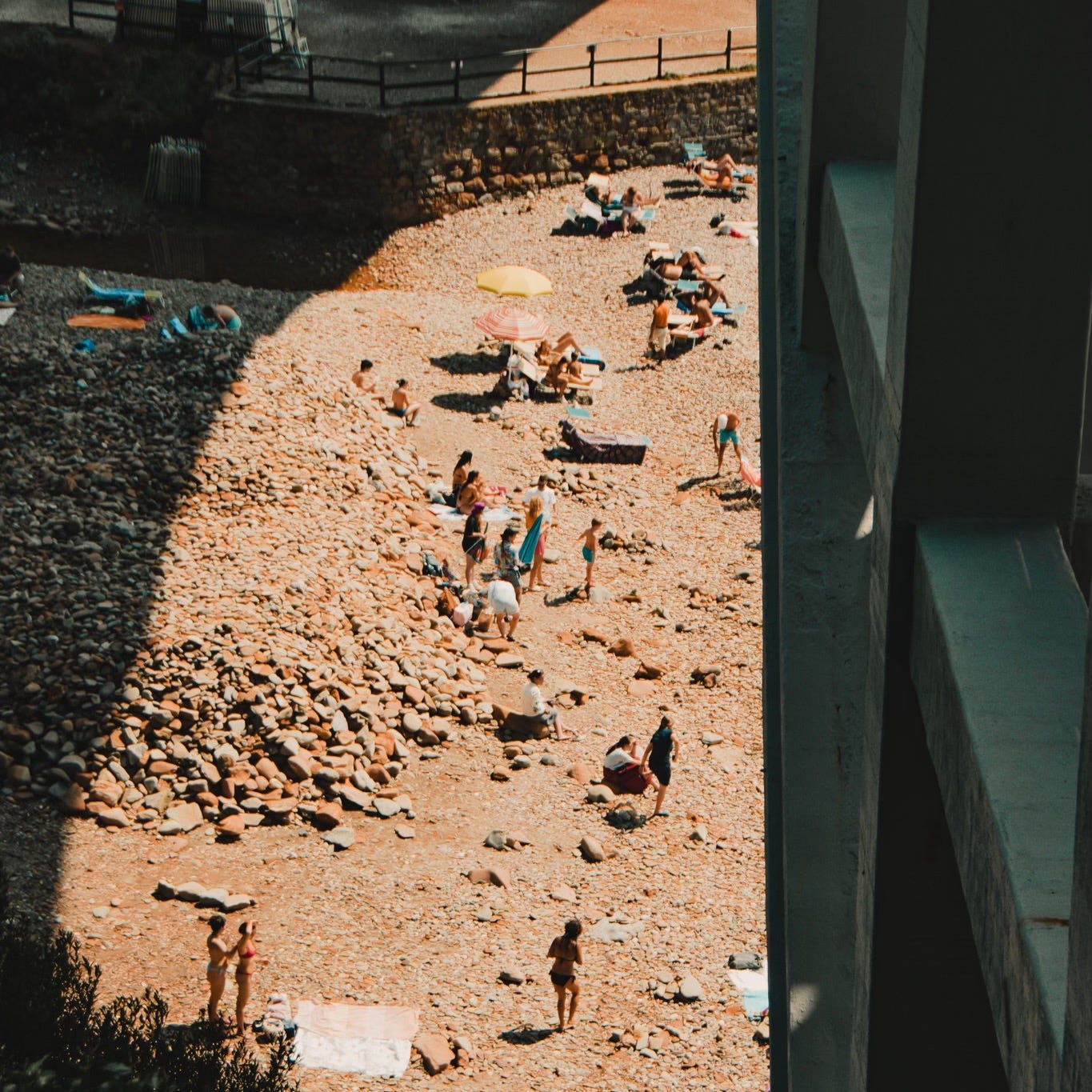
The train emerged from darkness and the world opened wide. A massive bridge arced between two cliffs, suspended over a rocky beach far below. Sunbathers dotted the shore. Beyond them, the sea stretched endlessly, impossibly blue. It was secluded and grand all at once—the kind of place you don’t stumble upon. You either know it exists, or you never find it.
And just as quickly, it vanished. The train plunged back into blackness, the window now reflecting my own stunned expression.
Two seconds. Maybe less.
I searched my friends’ faces, hoping someone else had seen it. But the moment had already slipped away. I stayed glued to the window, half-expecting the train to curve back, to offer proof that what I’d seen was real.
Of course, I went straight to my phone. Maps. Pinch, scroll, refresh. No signal. (Funny how a message can travel from space in milliseconds, only to be defeated by a few feet of rock.) When we finally resurfaced, I could narrow the location to somewhere between Livorno and Castiglioncello—but certainty faded fast. Doubt crept in. The image blurred.
The feeling didn’t.
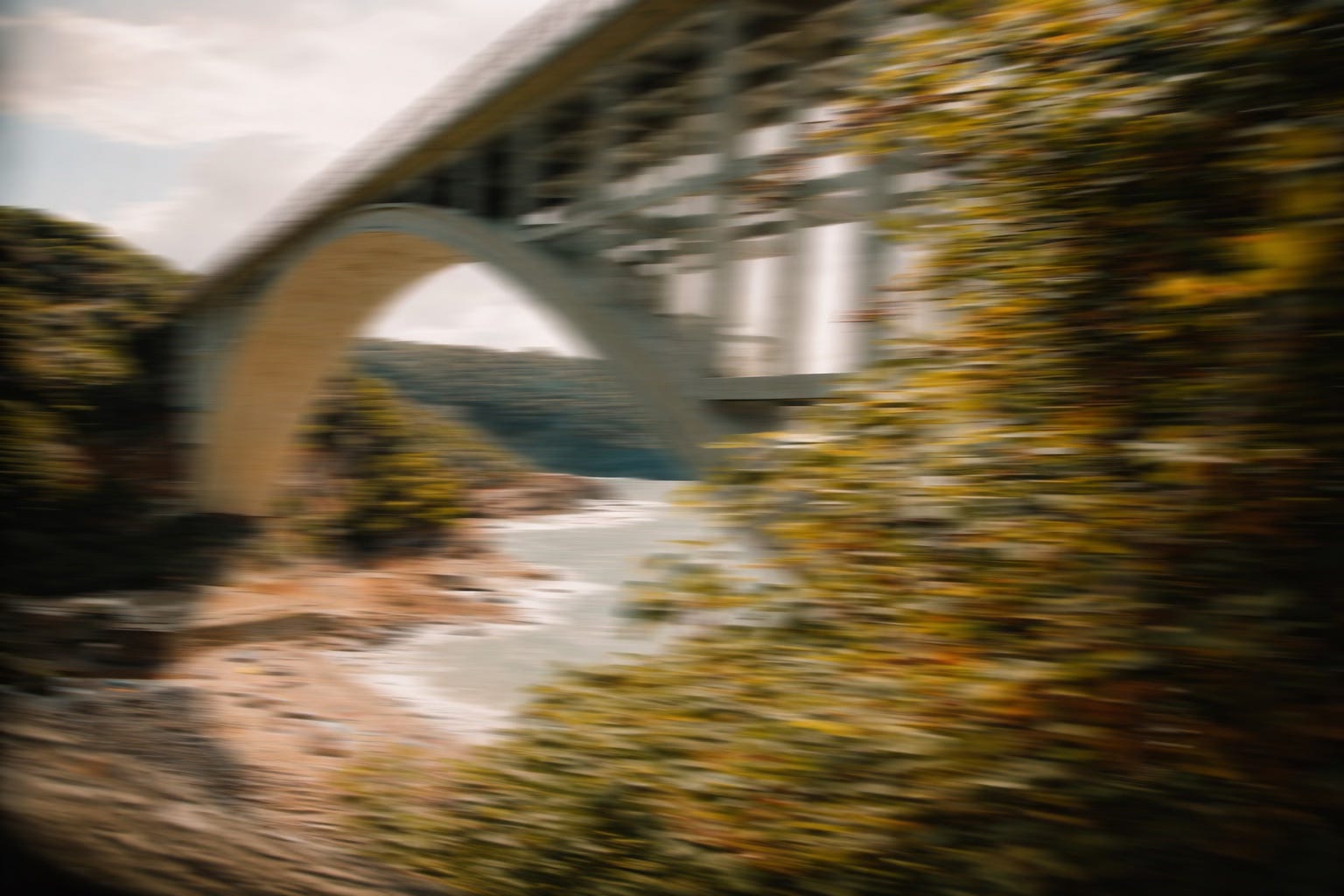
I’d been awestruck. Pulled forward by something I couldn’t reach. Blocked by glass and speed and time. I knew, without quite knowing how, that I had to find it. A gap had opened - and I felt compelled to bridge it.
A week later, I boarded a westbound train from Florence. My friends were headed to Castiglioncello for a lazy beach day. I told them I had a detour in mind—no guarantees, no promises. By the time we transferred through Pisa, three of them were in.
I was fairly sure the bridge sat near a small town called Quercianella, just north of our destination. If we failed, Castiglioncello waited as a consolation prize. A local bus was rumored to run the coastal road, though its schedule was anyone’s guess.
We stepped off at a tiny station and they followed me past a dirt parking lot, through brush and trees, to a sad little patch of roadside marked by a crooked, sun-faded sign. Hardly enough room to stand without flirting with traffic. Eventually, a bus appeared. We piled on, gripping the rails as the driver flew around blind corners, horn blaring like a warning prayer.
When we jumped off, we walked single file along the winding road, peering over sheer cliffs as waves exploded below, throwing mist high into the air. Then—around one more bend—the bridge revealed itself. Cars idled in a small clearing. An overgrown path dropped sharply down the cliffside.
As I pushed through the brush, the scene unfolded beneath me: the stone beach, the deadly drop from the bridge above, the railway tracks below—parallel, familiar. I was standing inside the moment that had once flashed past me at seventy miles an hour.
It felt like looking into a mirror, but instead of seeing my face, I saw the distance I’d traveled—from a fleeting glimpse to a deliberate arrival. I was no longer looking out—I was looking back.
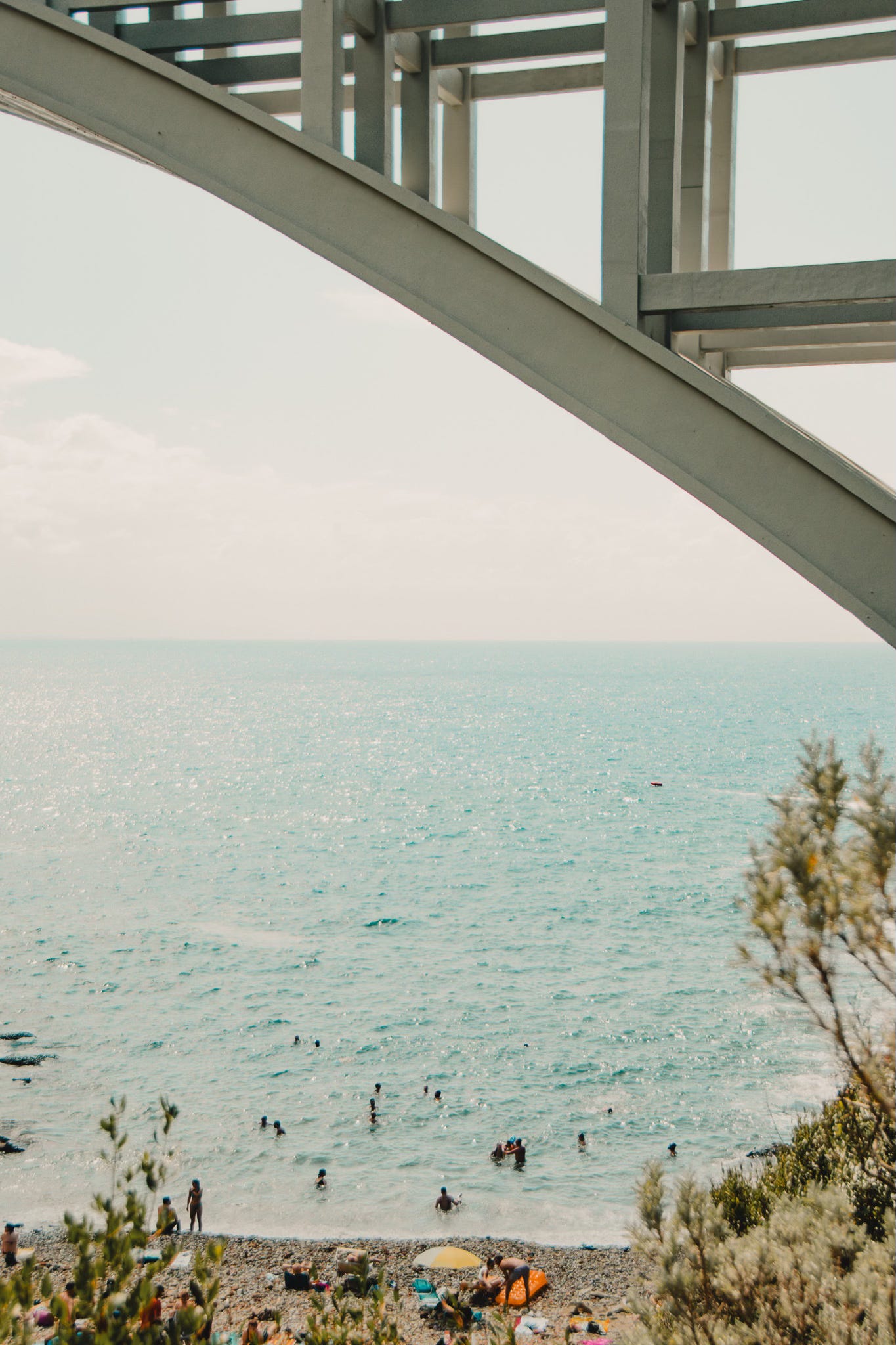
I lagged behind, camera heavy on my chest, letting the others move ahead. The waves surged with force below, but the horizon was calm, seamless, blue melting into blue. I sat there and let it all land.
Until now, I’d been holding onto a blurred memory. A guess. A feeling. Now there was no glass between me and the world. I could hear the waves, smell the salt, feel the heat on my skin. It was better than anything I’d imagined. Better than my dreams had allowed.
Think about that. I could have imagined anything—anything at all—and reality still won.
I felt proud. I felt lucky. A fleeting moment had been offered to me, and instead of letting it pass, I followed it.
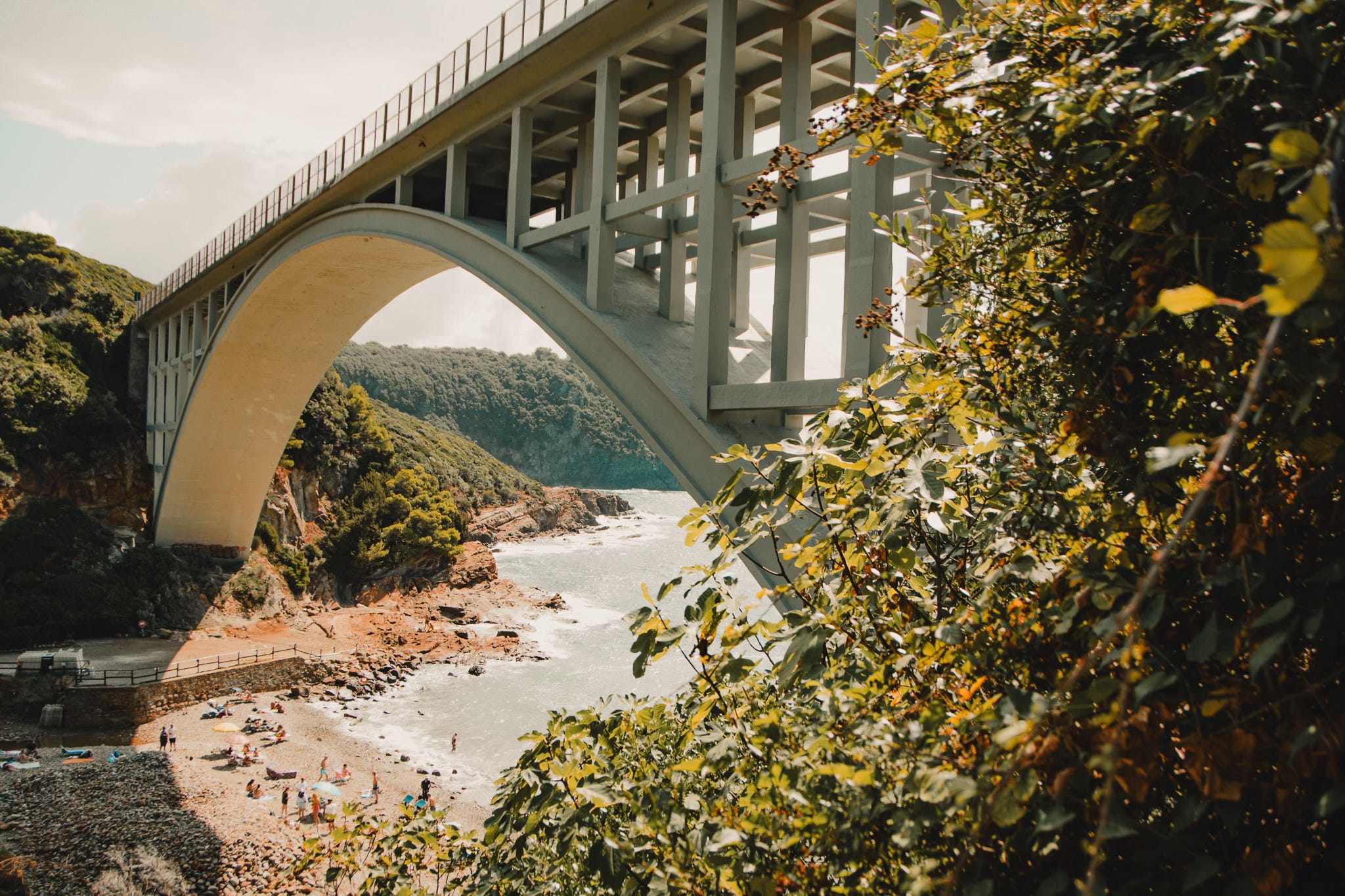
Finding the place was one victory. Sharing it was another entirely. My friends had trusted me, followed me, accepted the risk that this might lead nowhere. Watching their faces soften into wonder was its own reward. Though we weren’t alone on the beach, it felt like we’d stepped into a world apart. We exchanged looks, smiled, shook our heads. No words were needed.
I set my camera down, peeled off my shirt, and ran into the sea. I swam out past the pull of the undertow, leaving the troubled water behind me as I looked up at the structure above—a gap, beautifully connected.
In that water, everything else felt very far away.
All water under the bridge.
The most beautiful things in life arrive quietly. A look that says everything. A thought that rearranges your future. A narrow window that opens just long enough for you to step through.
We spend years building—laying foundations, putting in the work, chasing something just out of reach. But when you look back, it’s almost never the grind you remember. It’s a moment. The instant it clicked. The second you realized it had all been worth it.
We prize these moments because they don’t linger. They flash, they pass, and they leave us changed. Life isn’t built on long stretches of certainty—it’s built on flickers of feeling, split-second choices where we decide to move or stay still. And that fragility is the point.
So pay attention. These moments don’t announce themselves. But if you’re present—if you’re looking clearly—they stop being moments at all.
They become the beginning of your next story.
“All of us, whether or not we are warriors, have a cubic centimeter of chance that pops out in front of our eyes from time to time. The difference between the average person and a warrior is that the warrior is aware of this and stays alert, deliberately waiting, so that when this cubic centimeter of chance pops out, it is picked up.”
— Carlos Castaneda
🎧Listen of the Day