
Playing the Fool 🎭
A Noble Choice

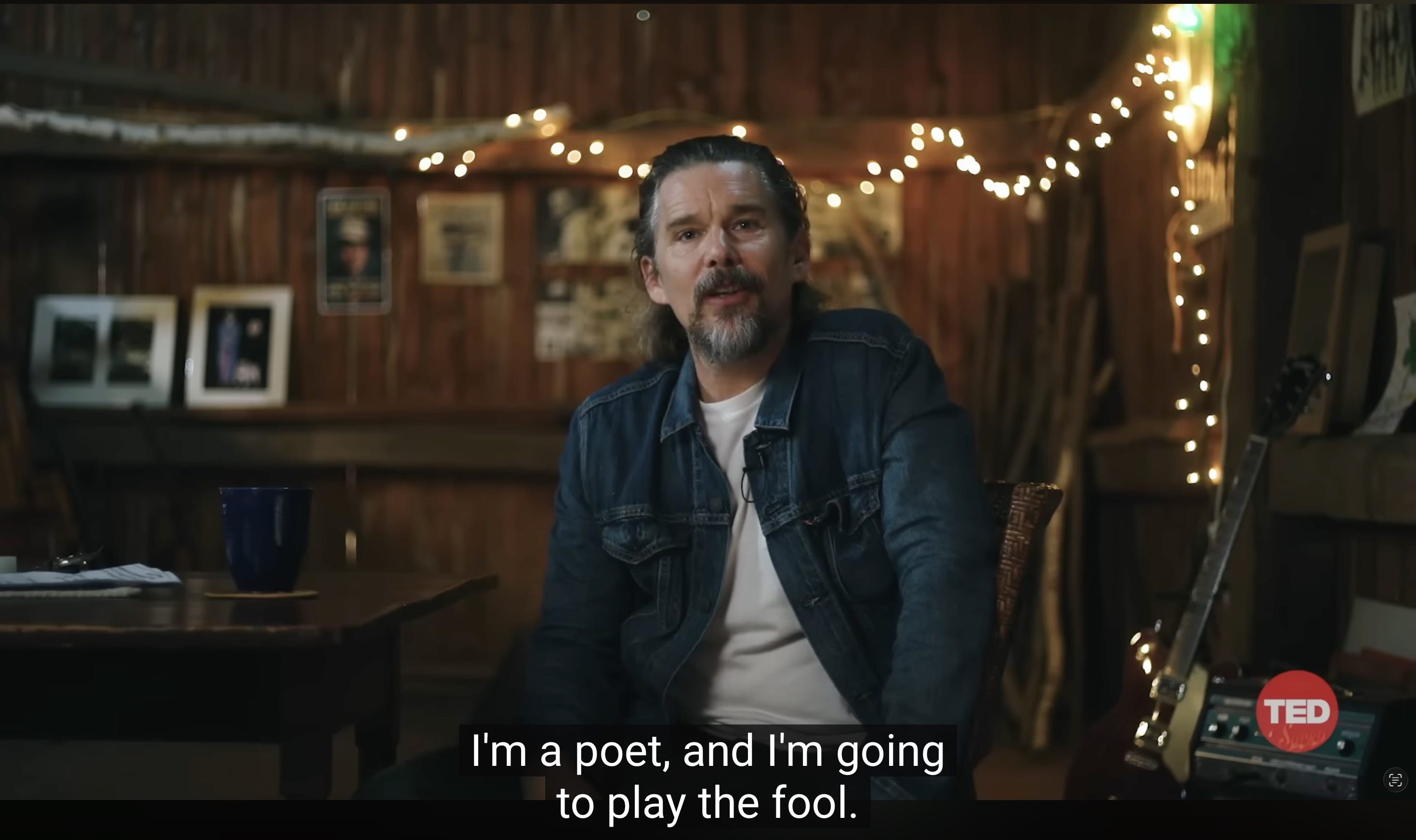
When my brothers and I were kids, my Nana gave each of us a nickname.
My older brother Jesse was the Thinker — speaking in full paragraphs before the rest of us could spell our own names, always a few intellectual miles ahead of his peers.
Then there was Dante, the Storyteller (not me! Surprised?) — forever consumed by some new idea, eager to gather an audience and passionately explain whatever theory or vision had taken hold of him that week.
My younger brother Lucci was the Organizer — the one who somehow always had a plan, keeping schedules, picking up pieces, impossibly consistent.
And me?
I was the Joker.
Not because I was especially funny, but because I would attempt to tell a joke, start laughing halfway through, and never actually make it to the punchline.
It’s strange how accurately those titles have followed us into our twenties.
Jesse is head of finance at a biotech company in New York City. Dante writes a newsletter and is building a YouTube channel that actually looks like it has a future. Lucci is about to graduate college with honors and has already founded his own valet business.
My résumé reads more like a flight itinerary: world travel, experiments with different lifestyles. A handful of half-formed identities tried on and discarded.
Lately, I’ve been thinking about that kid who wanted so badly to share something funny but couldn’t get through it without exploding into laughter.
I suppose I still want to represent the Joker in the family.
But perhaps in a different light.
I recently came across a TED Talk from actor Ethan Hawke that made me think of my old nickname. In it, he reflects on formative moments from his childhood that led him toward acting — not as a career choice, but as a calling. He speaks candidly about what the craft has given him over decades — not fame or accolades, but perspective and connection. He makes a compelling case for creativity as something essential to being human. And above all, he insists — with quiet conviction — that if you want to create anything meaningful, you must be willing to play the fool.
By this, he doesn’t mean to behave like an idiot. He means being willing to be exposed. Being willing to risk rejection, awkwardness, even laughter at your expense in the pursuit of telling your truth.
It’s daunting. But as Hawke suggests, the principle itself is straightforward.
“You have to express yourself, and to express yourself, you have to know yourself. It’s actually pretty easy. You just have to follow your love. There’s no path. There’s no path ’til you walk it. And you have to be willing to play the fool.”
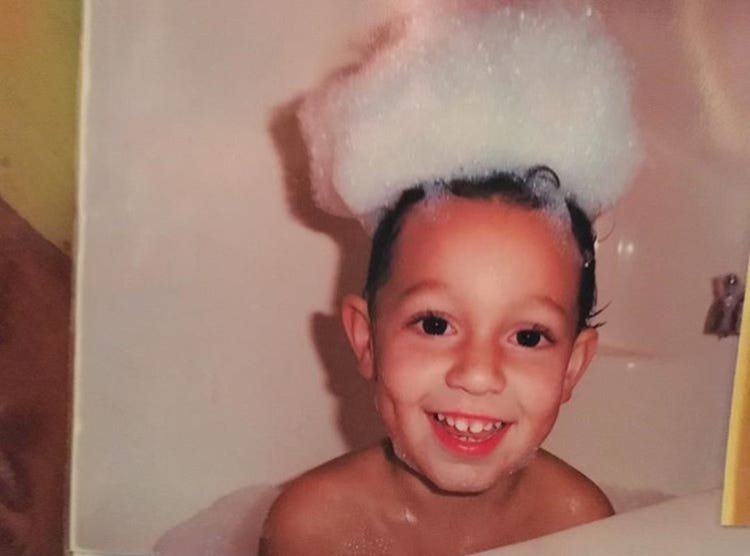
When I was younger, I wasn’t afraid to make a fool of myself. In fact, that was kind of my brand. I used humor to pull people toward me — friends, girls, whoever was around. Often at my own expense. I got thrown out of classrooms. I leaned into physical comedy a little too hard. I’ve injured myself more than once trying to land a laugh — but that laughter would heal the pain in an instant.
As I got older, something shifted. That same vulnerability started to feel riskier. I began to care more about how I was perceived. I built a shell for myself — something that felt protective at first, like maturity maybe, like control. Over time, it started to suffocate. The urge to express myself never left — I just wasn’t willing to play the fool anymore.
And while I managed to keep myself out of trouble, the Joker became lost in the deck. Unplayed. Forgotten.
When I heard Hawke speak, I immediately gravitated toward him. And in reflection, I began to understand why his words cut so deeply. He speaks plainly - someone who has already made peace with being misunderstood, with being laughed at. I both envied and revered him.
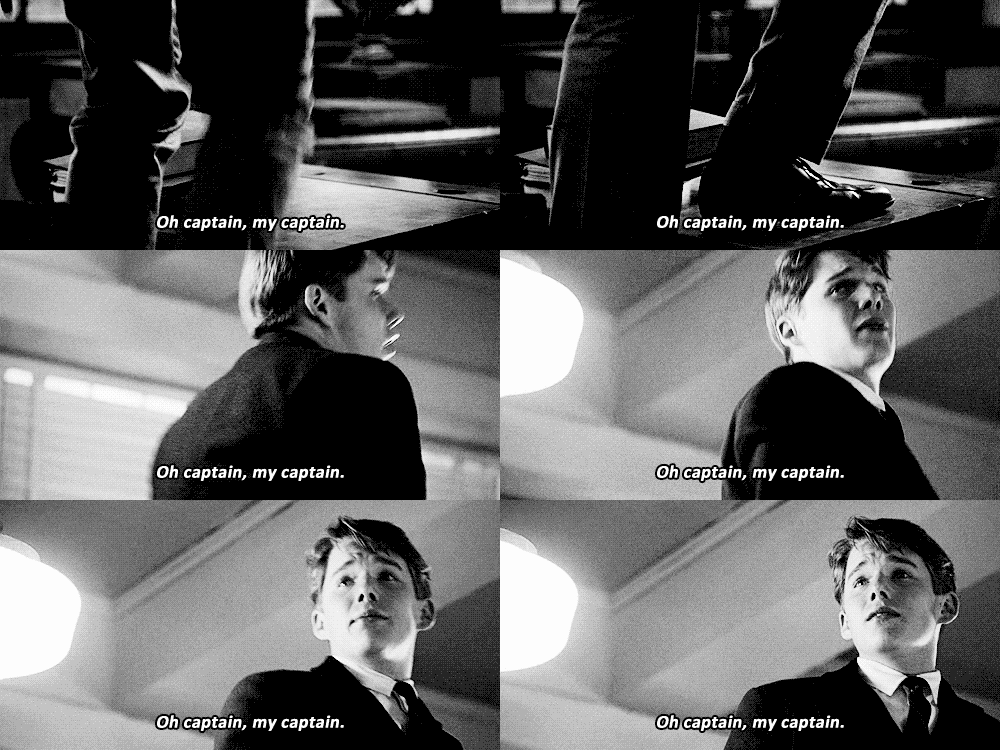
Ironically, he reminds me of Robin Williams’ John Keating — the teacher who urged his students to live deliberately — in Dead Poets Society. It was in this very film that Hawke once played the timid Todd Anderson (his breakout role at age 18). The young actor who once stood trembling on a desk, willing, in spite of all at stake, to risk humiliation for something he believed in — now stood on a different kind of stage urging the rest of us to do the same.
Hawke frames his entire talk around a simple but demanding idea: the willingness to play the fool is the price of creative freedom. And woven through that argument is a truth that feels even bigger.
“Art is not a luxury; it’s sustenance. We need it.”
Most of us don’t understand that until life cracks us open — until we experience loss, heartbreak, or, on the other end of the spectrum, a love so overwhelming it feels almost disorienting. It’s in those moments — the valleys and the mountaintops — that art stops feeling decorative and starts feeling necessary. We reach for it instinctively because it is the only language we have for the things we feel most deeply but cannot see, quantify, or explain.
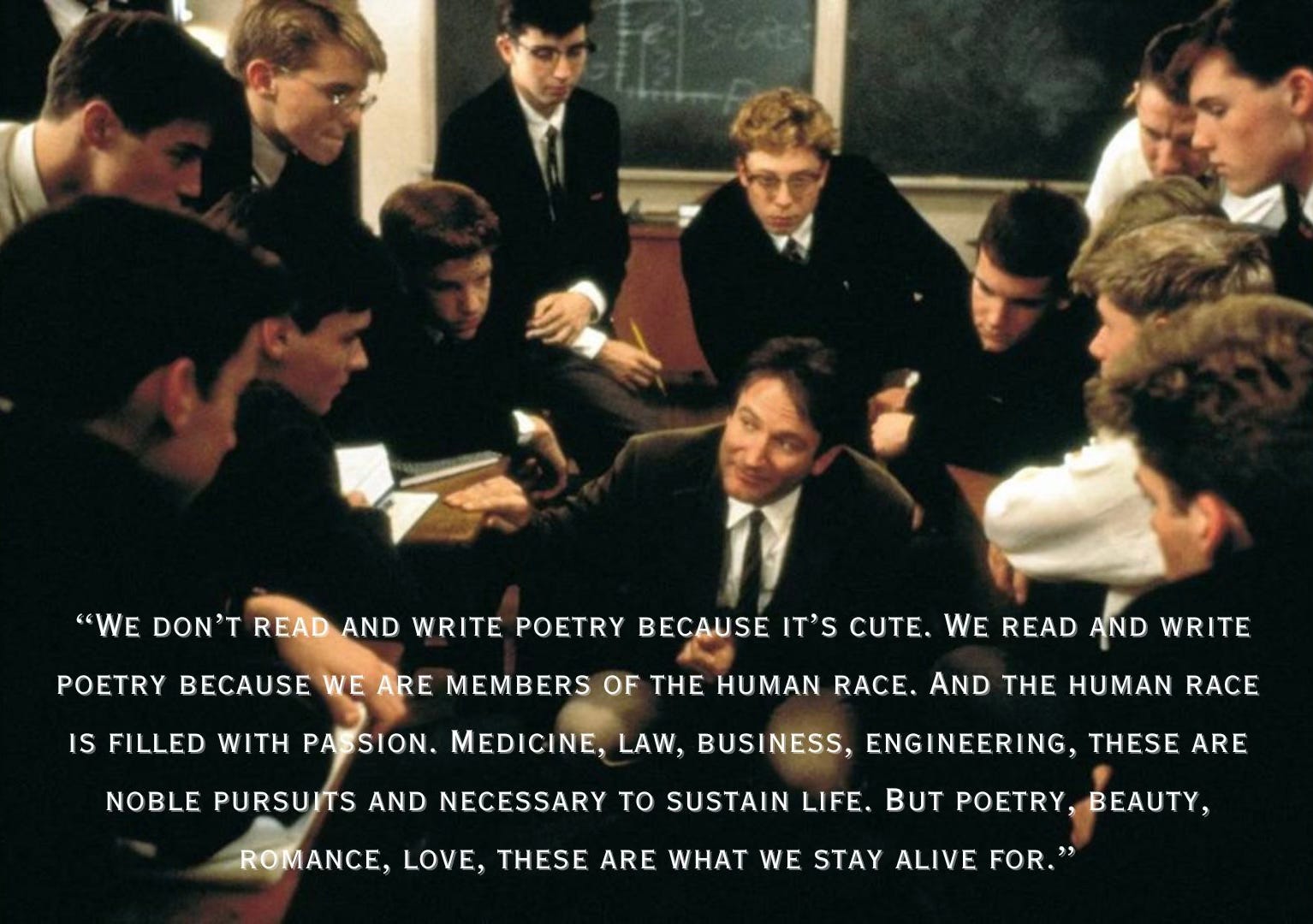
I think these words mean so much to me because I know what I am not.
I am not a scientist.
I am not a businessman.
I am no mathematician.
Those are noble paths — necessary ones. But they are not mine.
What I have are words, feelings. A sensitivity to stories. A pull toward expression that has never really left me alone.
Creative work is often framed as optional — not essential to survival, not foundational, more like decoration. The paint on the walls, not the walls themselves.
But I don’t believe that’s true.
I believe that storytelling is structural. I think it’s how we understand ourselves, how we connect, how we leave something behind that can’t be measured but can be felt.
When I write, I try to shape a feeling into something coherent, and when I succeed, I don’t feel indulgent; I feel useful. I feel like I am participating in something important — something that will leave a mark, even if it is more felt than seen.
And I know I’m not the only one. There are people quietly holding back, hesitant to pursue their passions because they don’t seem serious or sensible — and because being honest about them means laying down their swords and taking off their armor.
But if you feel the pull — if something in you keeps asking to be expressed — maybe that’s not an accident.
Give yourself permission to be creative.
It might not change the world overnight. But it will change the way you move through it. And that is no small thing.
🃏
While the Joker may be considered a throwaway card, I’ve decided I’m going to keep mine — and even play it from time to time.
Because playing it means risking embarrassment. It means laughing too early.
One day I’ll make it to the punchline.
The king protects his image.
The fool risks being seen.
And in my deck, that’s the nobler card.